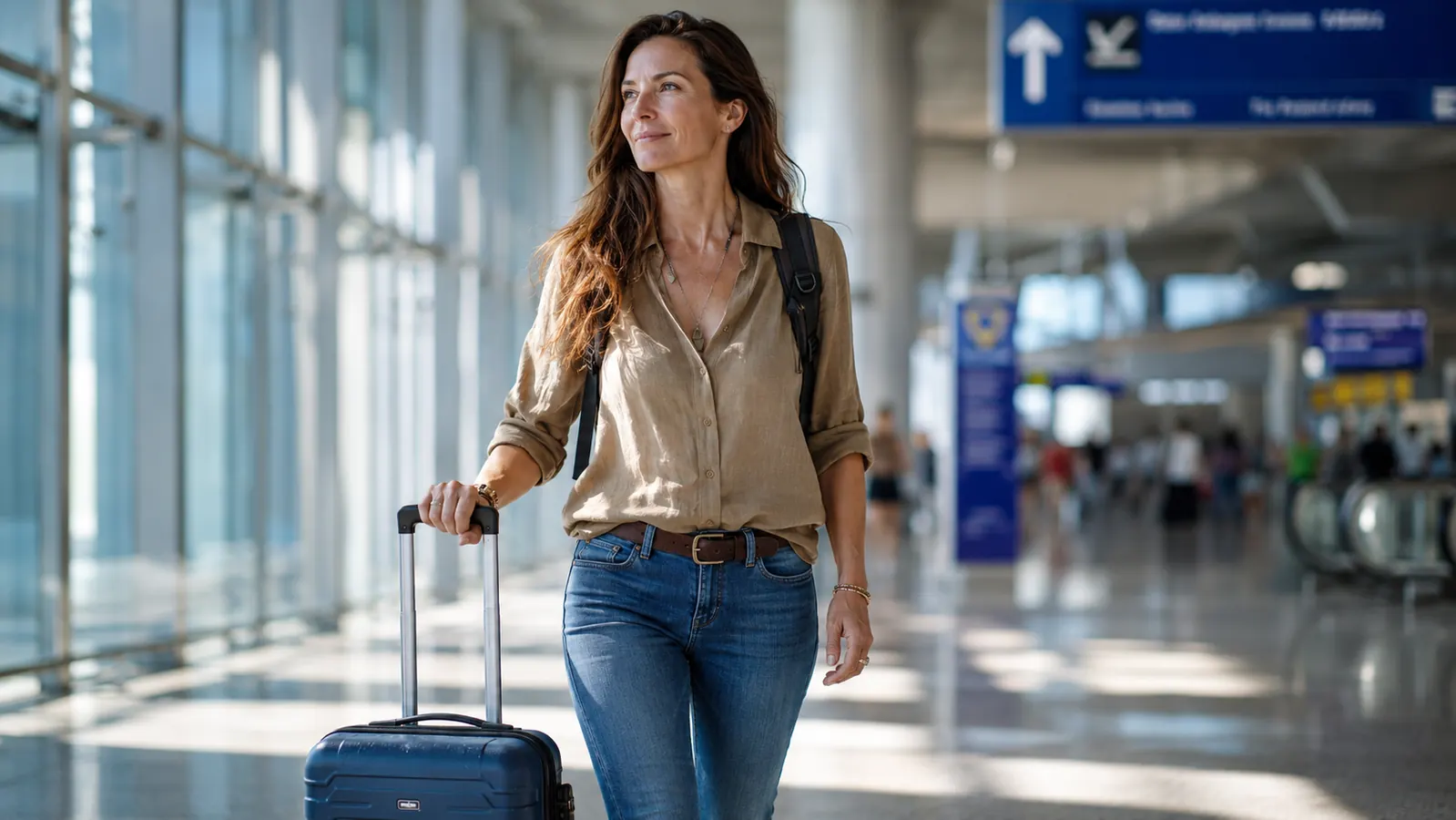
I have stood in more checked bag lines than I care to count. Forty-five minutes in Phoenix. An hour and fifteen in Atlanta during a connection I barely made. I used to think that was just travel. Then a colleague of mine showed up to a conference in Chicago with a single 22-inch roll-aboard and a daypack that folded down to the size of a softball, and I watched her walk straight past the bag-drop queue, straight past the claim carousel, and straight into a cab. She was at the hotel before I even got my bag off the belt. That was the last trip I checked a bag.
The system is simpler than most people expect. You need a carry-on suitcase that fits the overhead bin, and you need a personal item that fits under the seat in front of you. The trick is picking a personal item that can pull double duty: flat and compact on the flight so it stows easily, and roomy enough to carry everything you need once you land. A packable daypack does exactly that. I have been traveling with the ZOMAKE 20L Packable Backpack as my personal item for over a year, and I can get through a week-long trip, sometimes longer, without touching a single checked bag. Here is the system, start to finish.
The daypack that disappears when you do not need it and carries everything when you do
The ZOMAKE 20L Packable Backpack folds into its own pocket, weighs under a pound, and holds up to daily travel in a way most budget packs do not. Rated 4.6 stars across nearly 19,000 reviews. Check today's price before you start packing.
Amazon Check Today's Price on Amazon →Step 1: Pick Your Two-Bag Combo and Know the Rules Before You Leave Home
Every airline allows one carry-on and one personal item. The carry-on goes overhead. The personal item goes under the seat. The allowed size for a personal item varies by carrier, but the common floor is around 18 x 14 x 8 inches. Most packable daypacks when fully open come in comfortably under that. The ZOMAKE 20L measures about 19.7 x 13.4 x 7.5 inches when packed, which clears most airlines' requirements and slides under even tight economy seats without complaint.
Before your trip, look up the personal item dimensions for the specific airline you are flying. Write them down. Then verify that your daypack, when loaded, fits within them. Do this once, at home, with a soft tape measure and the bag actually packed. Seat-back slots differ by aircraft, and the last thing you want is a gate agent eyeing your bag. If your airline is strict, keep your personal item visibly soft and squishable. The ZOMAKE's nylon compresses easily when the main compartment is not stuffed to the zipper, which gives you some flex at the gate.
For your carry-on, a 21- or 22-inch hard shell or soft bag is standard. I fly with a 22-inch spinner. Between the two bags you have north of 45 liters of space once you account for the daypack's 20 liters and a typical carry-on's 35 to 40 liters. For most trips under 10 days, that is genuinely enough, and for longer trips with access to laundry it works too.
Step 2: Pack the Carry-On with Everything You Plan to Wear
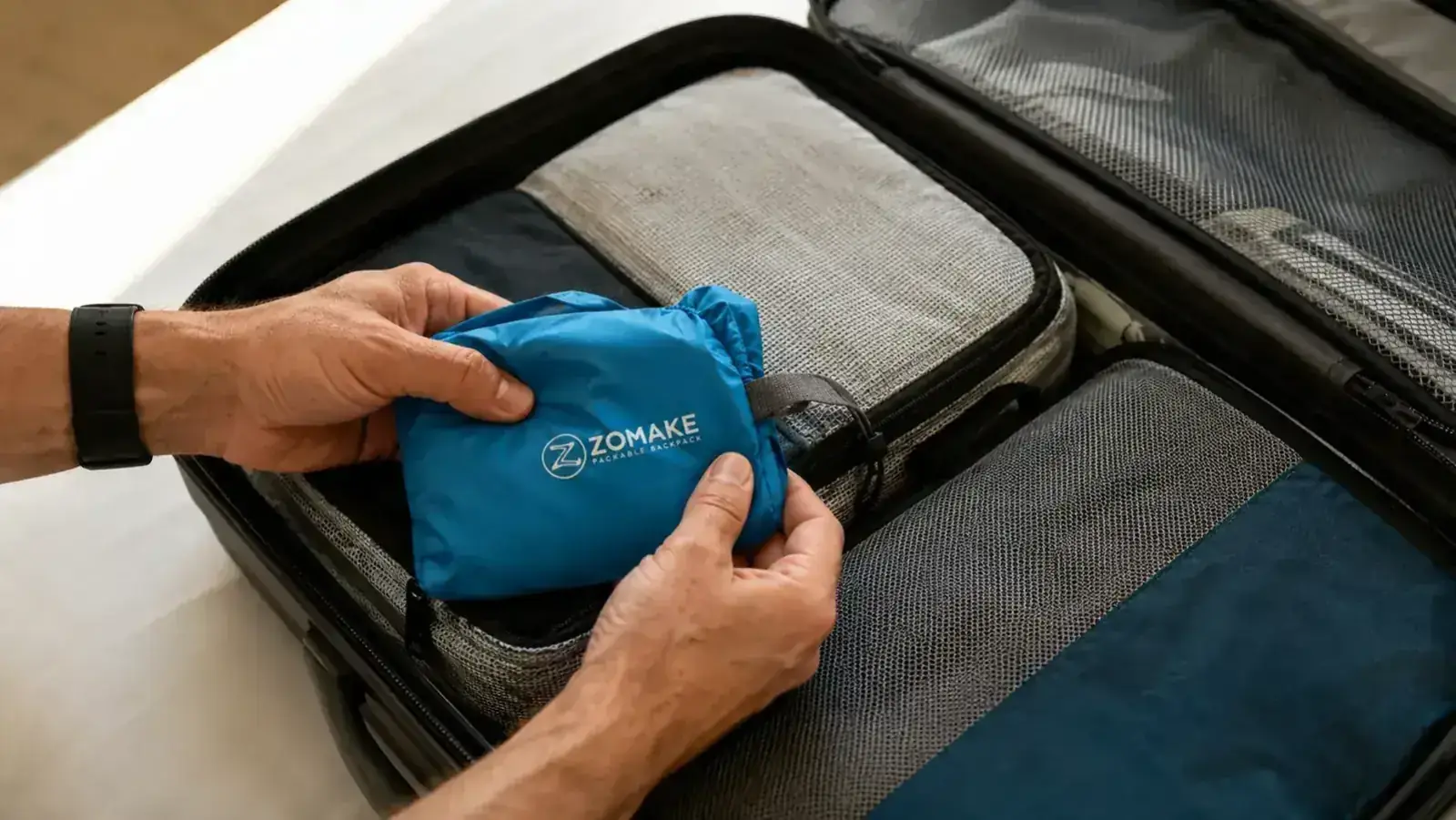
All clothing goes in the carry-on. Every shirt, every pair of pants, every pair of shoes beyond the ones on your feet. This is non-negotiable if you want the system to work. Clothing is bulky but not heavy, and a well-organized carry-on with compression packing cubes can hold a week of clothes without drama. I roll everything. Socks go inside shoes. Shoes go in a shoe bag and sit flat at the bottom of the suitcase. I fit five days of outfits plus a dress layer into a standard 22-inch bag without any of the creative Tetris some packing guides ask you to perform.
Keep the carry-on to true clothing and nothing else. Toiletries, electronics, documents, and your go-bag essentials all belong in the daypack or your personal item pocket. Mixing categories between bags creates the same problem you had before: you are digging through the wrong bag at the wrong moment.
Keep the carry-on for clothes only. Everything you need to reach mid-flight or mid-day goes in the daypack. That one rule eliminates 90 percent of the fumbling.
Step 3: Load the Daypack with Your Flight Essentials and Day-Trip Gear
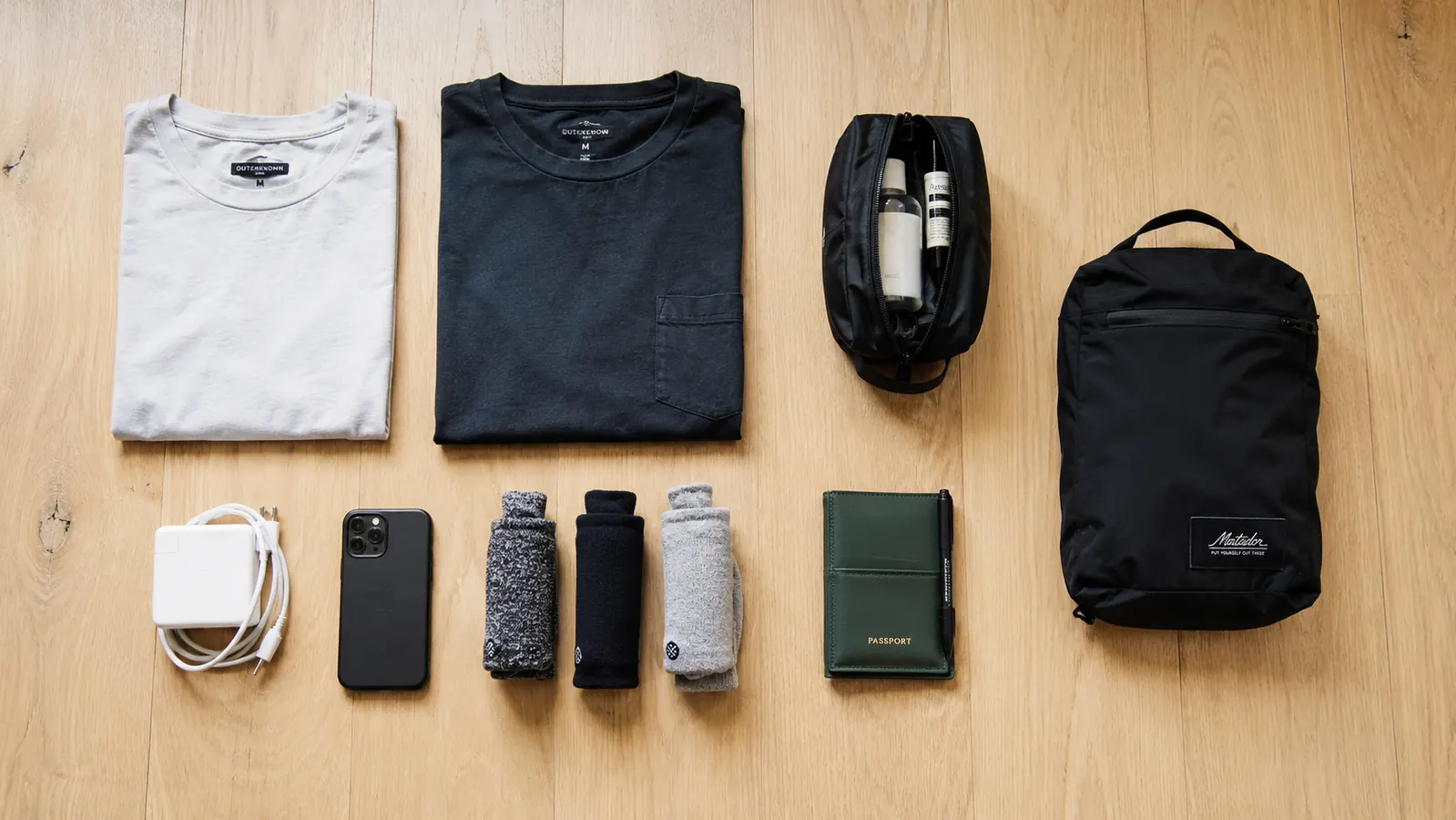
This is where the packable daypack earns its spot. On the plane, it holds everything you need during the flight without forcing you to open the overhead bin: your laptop or tablet, headphones, a book, your snacks, a travel neck pillow if you use one, and your passport wallet or travel documents. The ZOMAKE has a main compartment, a front zip pocket, and two side mesh pockets that hold a water bottle each. That is enough organization to keep the in-flight essentials accessible without everything sliding to the bottom of one big pocket.
On the ground, the daypack becomes your day bag. At your destination, you leave the carry-on at the hotel and head out with just the pack. It holds a change of clothes, your camera, a reusable water bottle, your travel wallet, sunscreen, and a jacket. On a warm-weather trip I have comfortably fit a full day's worth of supplies in the ZOMAKE's 20-liter main compartment without the pack feeling overstuffed or pulling awkwardly on my shoulders. The padded straps are thinner than a dedicated hiking pack, but for city walking and light day trips they hold up well.
Before you pack the daypack for the flight, think through your whole day of travel, door to door. You will want your ID and boarding pass accessible at security. You will want your headphones and snack before takeoff. You will want your phone charger if the flight has USB ports. Layer the daypack in the order you need things, not alphabetically. Put the boarding pass and ID in the front pocket. Put the charger in the top of the main compartment. The snack goes in an easy-reach side pocket. Once you build this habit, you will stop being the person holding up the security line.

Step 4: Fold and Stow the Daypack During the Flight
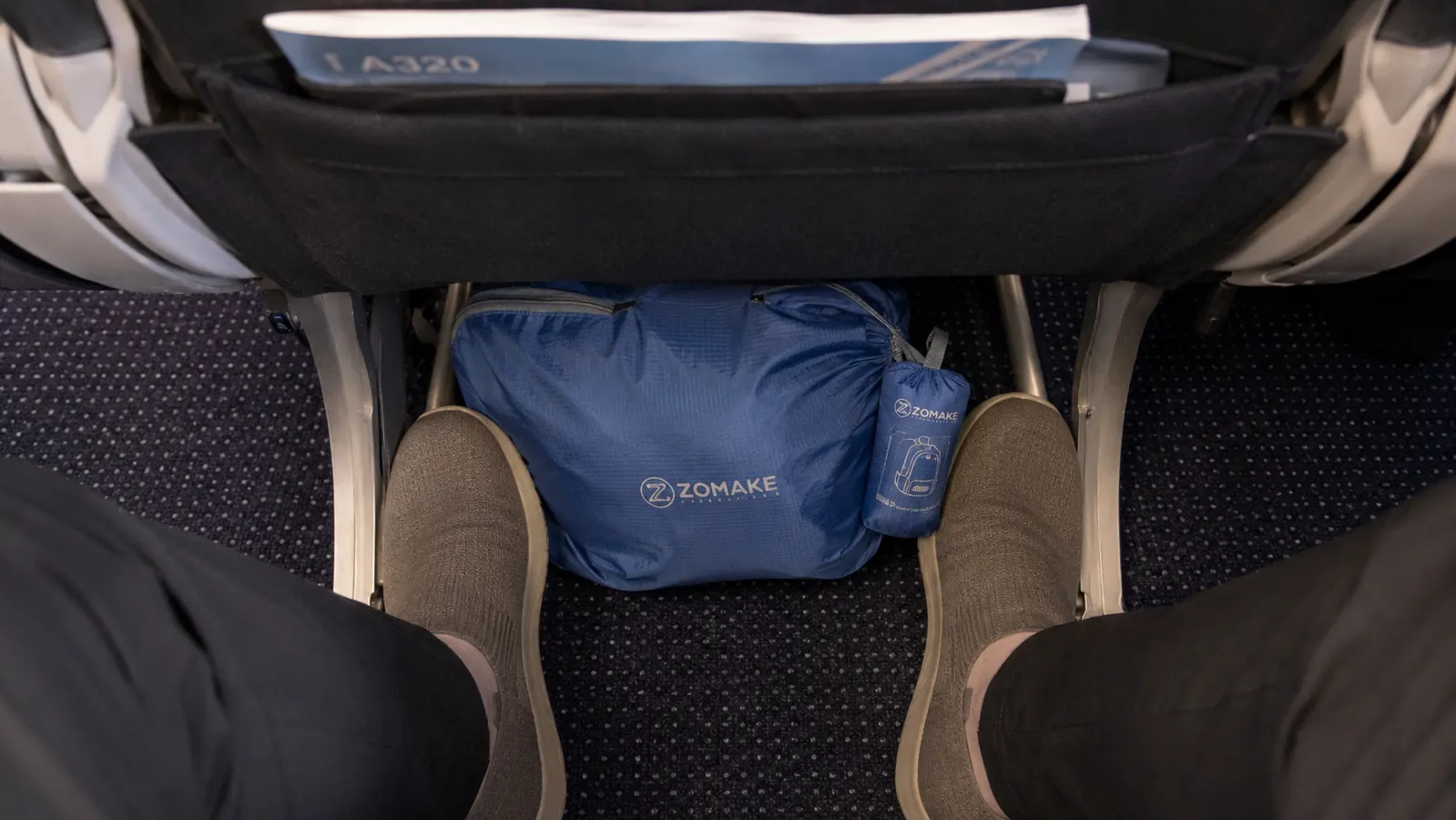
Once you have landed and checked into your accommodation, you will pull the daypack out for daily use. But during the actual flight, after takeoff, you can empty it of the bulkier items you have finished using and fold it down. The ZOMAKE folds into its own interior pocket, ending up as a small flat square roughly the size of a book. Tuck it into the seat-back pocket or your lap. At your destination, unfold it, reload it, and you have your day bag ready before you clear the jetway.
This is the feature most travelers miss when they consider a packable daypack. It is not just small; it folds small on purpose. You are not carrying dead weight for the duration of a long flight. And when you hit the return trip with souvenirs or extras you picked up along the way, the daypack expands to carry the overflow so your carry-on still closes cleanly. I have flown home from a trip to Portugal with a daypack holding two bottles of olive oil, a small ceramic plate, and a linen scarf, and the carry-on still fit in the overhead without argument.
Step 5: Build the Return-Trip Overflow System Before You Leave
The most common reason people end up checking a bag on the way home is souvenirs and extras they did not plan for. The packable daypack solves this, but only if you plan for it deliberately. Before your trip, calculate your carry-on's available overflow space. If your carry-on is 80 percent full on departure and you are going somewhere you know you will shop, leave 20 percent of space empty intentionally. Wear your bulkiest shoes on the plane and pack lighter clothes for the outbound leg so you have room on the return.
On the return trip, the daypack absorbs the extras. The ZOMAKE's 20-liter capacity is comfortable for about 8 to 10 pounds of soft goods. If you are buying anything fragile, wrap it in your clothes inside the carry-on, not in the daypack. The daypack's nylon shell is splash-resistant and durable enough for daily wear, but it is not padded for impact protection. Plan accordingly, and you will never stand at an airport check-in counter again trying to justify to yourself why this trip required a 50-pound checked bag.
What Else Helps
The daypack-plus-carry-on system works better with a few supporting habits. First, wear your heaviest shoes on travel days. Boots, sneakers, anything bulky goes on your feet, not in your bag. Second, choose clothing that serves multiple outfits. A neutral merino wool base layer worn three ways is worth more than three single-use pieces. Third, use compression packing cubes in the carry-on. They do not make clothes smaller, but they eliminate the wasted air space and keep categories organized so you are not unpacking half the bag to find one shirt.
For longer trips where laundry is available, the math gets even easier. I have done 14 days in Japan with the same carry-on and ZOMAKE daypack. I did laundry twice. Every piece of clothing I brought did real work on the trip. Nothing came home unworn. If you commit to that discipline once, on one trip, you will not go back to checking bags.
For the full breakdown of what to pack inside your carry-on using compression cubes to maximize space, read our guide on the ZOMAKE daypack long-term review. And if you are still on the fence about whether a packable daypack is worth adding to your kit, the 10 reasons every carry-on traveler should own one covers the full case. Or if you want the story of the time the whole system was tested by a bag-loss disaster abroad, read the Rome carry-on story.
Ready to skip the bag check line for good? Start with the daypack that makes it easy.
The ZOMAKE 20L Packable Backpack is the lightweight, foldable personal item that anchors the whole carry-on-only system. Under a pound, water-resistant, and big enough to handle a full day out. Nearly 19,000 travelers give it 4.6 stars. Check today's price and get your system in place before your next trip.
Amazon Check Today's Price on Amazon →