
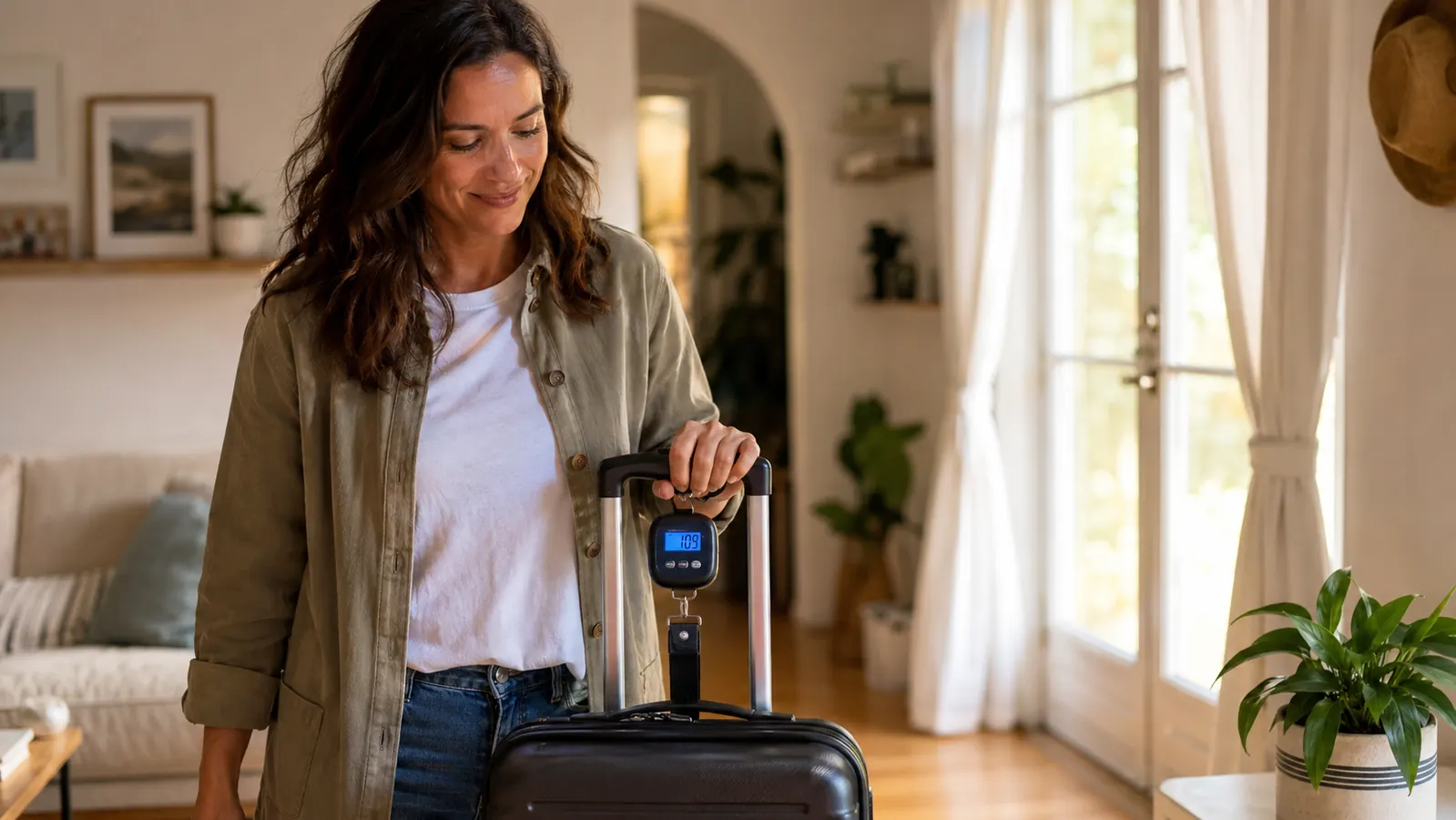
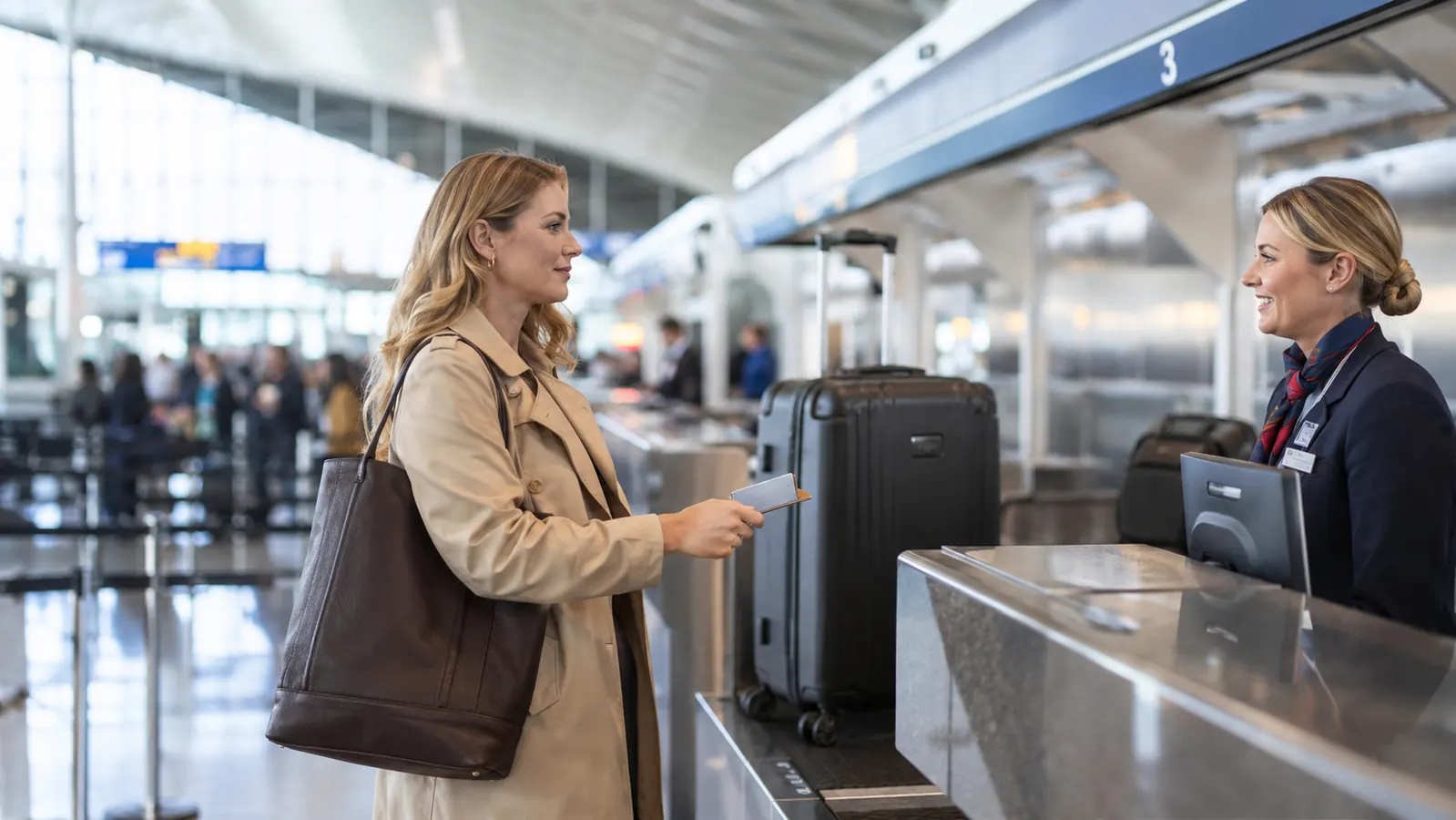
I paid $75 in overweight bag fees at Newark the fall before last. I had packed exactly the same way I had for the previous dozen trips. The difference was that United had quietly dropped their checked bag limit from 55 pounds to 50, and I had no idea until the agent pointed at her screen and told me it was $75 or I needed to pull things out on the spot. I stood there in line, unzipping my bag, pulling out winter boots, and shove them into my already stuffed personal item while other passengers watched. Never again.
The fix is not packing less. It is building a real pre-flight weight check into your routine, the same way you build in time for security. Since I started using the travel inspira digital luggage scale before every single trip, I have checked in at 47 airlines counters without a single overweight fee. The scale costs less than $10. The system takes about eight minutes. Here is exactly how I do it.
Tired of paying $50 to $200 every time your bag is two pounds over? This is the fix.
The travel inspira digital luggage scale has 20,000+ reviews and reads to 0.1 lb accuracy. At under $10, it pays for itself the first time you use it.
Amazon Check Today's Price on Amazon →Step 1: Know Your Airline's Actual Weight Limit Before You Pack a Single Item
This sounds obvious but most people skip it. Airline weight limits are not standardized, and they change. Most domestic carriers cap checked bags at 50 lbs for standard economy tickets. International flights on some carriers allow 70 lbs. Budget carriers like Spirit and Frontier set their own limits and charge steep fees that start the moment you hit one pound over. If you are connecting on two different carriers, each leg may have its own policy. A Star Alliance ticket booked through United might actually route you on Lufthansa from Frankfurt, and Lufthansa enforces their own weight limits on that leg.
Before you open your suitcase to start packing, look up the baggage policy for every carrier operating every leg of your trip. Write the limit down somewhere you will not lose it, ideally in the notes app next to your confirmation number. If the limit is 50 lbs, I personally target 47 lbs. That three-pound buffer accounts for scale variance between mine and the airport's, and for the granola bars and duty-free bottles I always end up picking up.
Carry-on limits are equally important if you are flying budget or on a full-size carrier with strict overhead-bin enforcement. Most major carriers cap carry-ons at 22 lbs to 40 lbs, and basic economy tickets on airlines like Delta and American have started enforcing this more aggressively since 2023. Check before you pack. Knowing the number is the whole game.
Step 2: Weigh Your Empty Bag First
This step trips up even frequent travelers. Your suitcase itself has weight, and that weight counts against your limit. A cheap hard-shell spinner from a discount retailer can weigh 10 to 12 lbs empty. A premium lightweight bag from a brand like Away or Briggs and Riley might come in at 6 to 7 lbs. That four to six pound difference is exactly what gets people flagged at the counter when they assumed they had headroom.
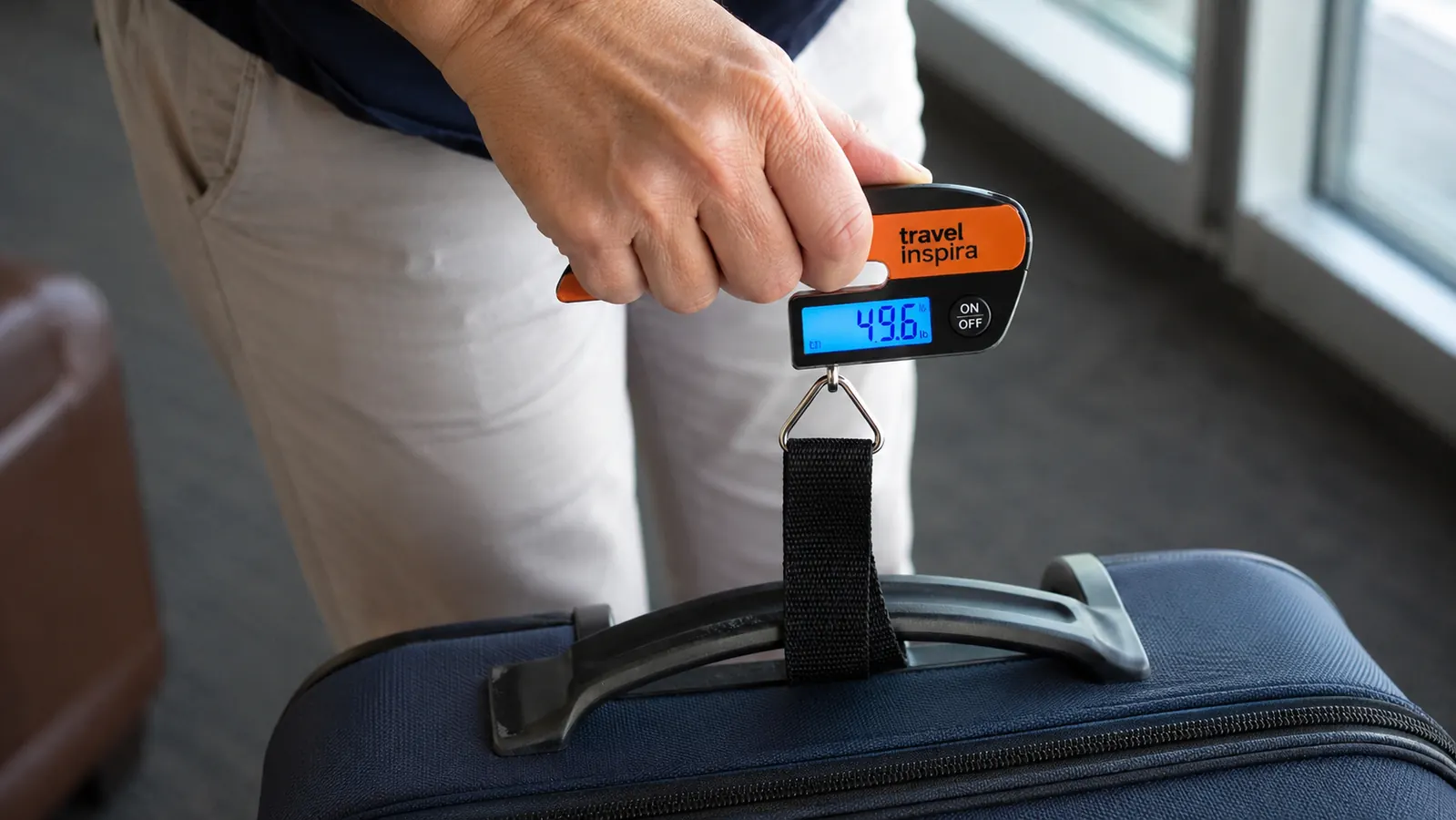
Hook the travel inspira scale onto the handle of your empty bag and lift. The scale reads in about two seconds and holds the number on the display so you do not need to stare at it mid-lift. Write down or mentally note the empty bag weight, then subtract it from your airline's limit. That remainder is your actual packing budget. A 50 lb limit with an 8 lb bag means you have 42 lbs of clothes, shoes, and toiletries to work with. Start packing with that number in mind.
Step 3: Pack Heavy Items First, Then Do a Mid-Pack Weight Check
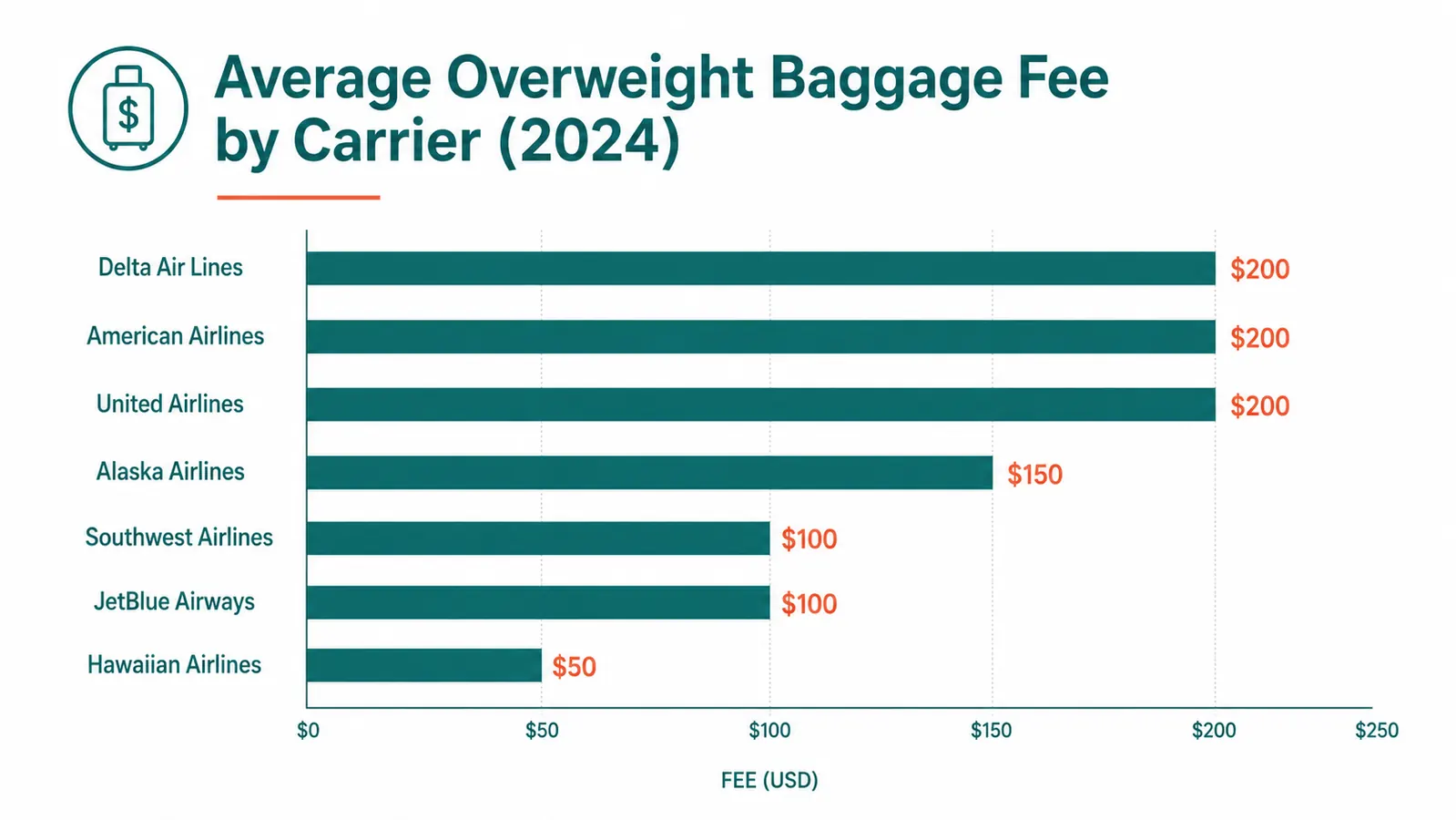
Shoes, books, laptops, full-size bottles, and electronic gear are where weight accumulates fast and invisibly. Most people pack light things first, like folded clothes, then layer in the heavy items toward the end. By the time they realize the bag is too heavy, everything is already organized and pulling it apart is a chore. Reverse that order.
Put your heaviest items in the bag first: shoes at the base, then toiletry bags, electronics, and anything in hard cases. At the halfway point of packing, do a quick weight check. Loop the travel inspira strap around the handle, lift the bag off the floor until it hangs freely (you only need to lift it a few inches), and let the scale register. If you are already at 80 percent of your budget and you have not added clothes yet, you know now, not at the airport tomorrow.
This mid-pack check is the single highest-value habit in this whole system. It gives you time to make real decisions, like leaving the heavy hardcover book at home and downloading it instead, or switching from a full-size conditioner to a travel refill bottle. Those swaps are easy at home with time to spare. At the airport, they mean digging through a packed bag in front of a growing check-in line.
I have checked in at 47 airline counters since I started using a luggage scale at home. Not one overweight fee. The scale weighs about as much as a deck of cards.
Step 4: Do the Final Weigh-In With Everything Closed and Ready to Go
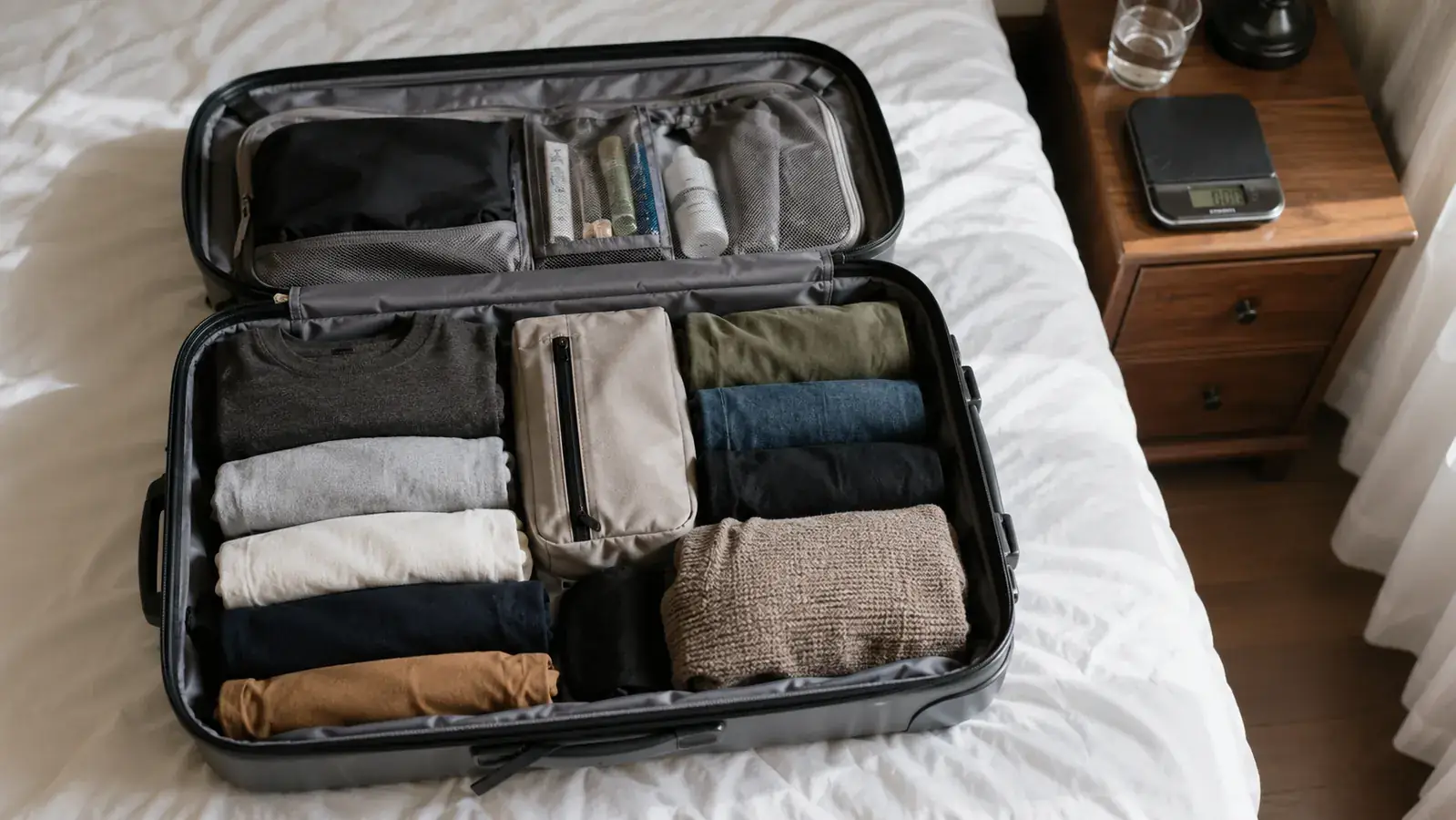
Once you have packed everything you intend to bring, zip the bag fully closed. Attach any accessories that will travel on the outside, like compression straps or travel locks. Then do your final weigh-in with the travel inspira scale.
The technique that matters: hold the scale handle, not the suitcase handle. Let the bag hang completely free with no part of it touching the ground, the bed, or you. The scale only registers accurately when the bag is in free suspension. I usually stand in a doorway and lift the bag using the scale's wrist strap so both hands are committed to the lift. The display holds the reading for about five seconds after you set the bag down, which is plenty of time to check it without rushing.
If you are over your target weight, now is the easy time to fix it. Look at your packing list and identify one or two items you can move to your carry-on, replace with lighter alternatives, or simply leave behind. In my experience, the culprits are almost always shoes (I now travel with a maximum of two pairs no matter the trip length) and full-size toiletries that could be decanted into 3 oz travel bottles. Removing just one extra pair of shoes typically saves one to two pounds. That alone handles most overages.
A note on the travel inspira's accuracy: I tested mine against a calibrated bathroom scale by weighing myself, then weighing myself holding the bag, and subtracting. The travel inspira read within 0.2 lbs every time across five tests at different weights. At airport check-in, airline scales are also calibrated, but they do not always match perfectly. Staying two to three pounds under your limit absorbs any variance without putting you at risk.
Step 5: Recheck After Any Airport Souvenir or Duty-Free Shopping
The most overlooked leg is the return trip. You left home at 47 lbs. At the end of the trip, you have added two bottles of wine from a local vineyard, a ceramic mug, four bars of soap because the scent was perfect, and a pair of shoes you found at a street market. Without a scale check, you are guessing again.
The travel inspira weighs about as much as a deck of cards and fits in the front pocket of most suitcases. It goes everywhere I go. On the last morning of any trip where I have done shopping, I weigh the bag before I leave the hotel room. If I am over, I have time to rearrange, ship something home, or decide which item to leave behind. At the airport, that flexibility is gone. There is no good option at the counter besides paying the fee or making a scene.
For international return trips, also factor in that liquids purchased after security (like duty-free) often have to be checked if you are connecting and re-clearing security. A bottle of olive oil or wine that you planned to carry on might end up in your checked bag, adding weight you did not count on. The scale handles that surprise the same way it handles everything else: just re-weigh before you leave and adjust.
What Else Helps Beyond the Scale
The scale is the foundation of the system because it gives you a number you can trust. But a few other habits make the whole thing easier. First, invest in lightweight luggage if you are checking bags frequently. Shaving three pounds off your empty bag weight is three more pounds of actual belongings you can bring. Second, use packing cubes, especially compression versions, not because they reduce weight but because they help you see everything at once and make the mid-pack audit much faster. Third, keep a running packing list in your phone notes so you are not improvising every time. Improvised packing leads to throwing things in without thinking about weight.
For people who check bags often, I also keep a small kitchen scale at home to weigh individual items I am unsure about before they go in the bag. A heavy lens for a camera, a full-size bottle of sunscreen, a travel iron: these are the items that add up quietly. Knowing their weight before you start lets you make smarter trades. The travel inspira scale works for the bag as a whole, but the kitchen scale catches surprises at the item level before they become a problem.
The travel inspira scale fits in a coat pocket and reads in two seconds flat.
4.7 stars from 20,000+ verified buyers. Reads in pounds and kilograms. Holds the display reading after you set the bag down. This is the one I use every single trip.
Amazon Check Today's Price on Amazon →